
TESTING SERVICES
HIV Testing & Hepatitis C (HCV) Testing
Sexual health is just as important as your physical and emotional health and wellness. ARE offers a variety of sexual health services, including free HIV and Hepatitis C testing on-site in a confidential, judgement-free space. The testing typically takes less than twenty minutes for results. If you do test positive for HIV or HCV, ARE’s Education team will support and educate you on next steps to access care and treatment.
STI Lab Testing Now Available
We are now offering free STI lab testing including:
- Chlamydia/Gonorrhea
- Syphilis
- HIV
- Hepatitis C (HCV)
- Hepatitis B (HBV)
Anyone can get tested, regardless if you have symptoms or not. Testing is private, confidential and done in a judgment free space.
Take control of your sexual health and get tested!
PrEP (HIV Prevention Medication)
Are you looking for prevention methods to help protect you from HIV? ARE offers PrEP navigation to both uninsured and insured community residents. What’s PrEP? PrEP, or pre-exposure prophylaxis, is a preventive medication used to reduce the risk of HIV infection by 92%. PrEP is a HIV combination pill called Truvada. ARE offers PrEP access and support for people looking to reduce their risk of HIV infection. We will help you access PrEP at no cost to you, and link you to medical services and information related to PrEP usage. ARE also offers condoms and related prevention methods for HIV and STD’s, free to the community!

Prevention Services
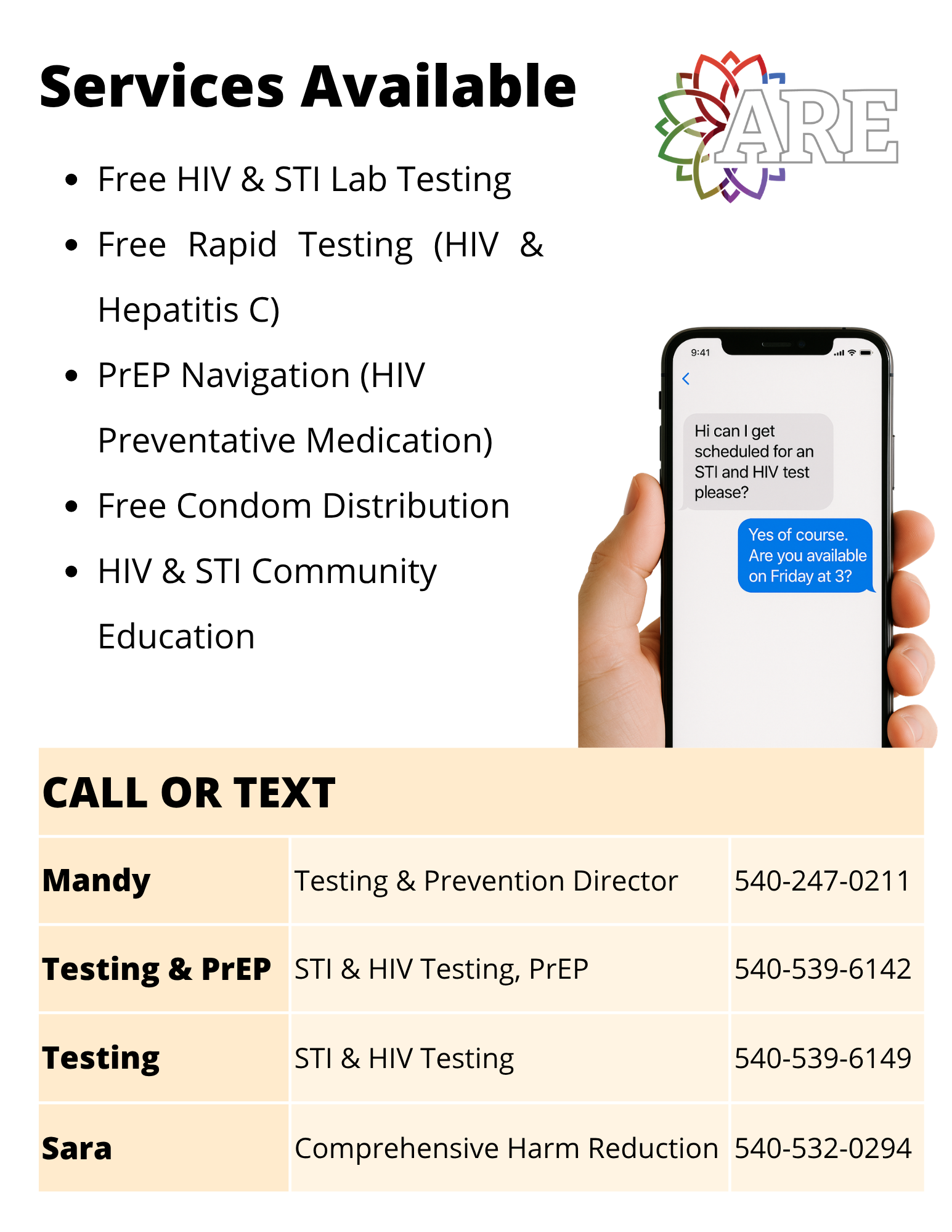
Here is a comprehensive list of all of ARE’s Prevention Services:
STI Lab Testing Chlamydia/Gonorrhea, Syphilis, HIV, Hepatitis C (HCV), Hepatitis B (HBV)
Rapid HIV & HCV testing-free, rapid, confidential, twenty minute tests. Testing on-site at businesses, health centers, schools, etc.
Risk Reduction Counseling-free, confidential, and judgment-free education to reduce HIV risk
PrEP (Pre-Exposure Prophylaxis) Navigation-navigation for those that are insured and uninsured and linkage to information and medical services related to PrEP
Condom Distribution Program-free internal and external condoms, and preventive methods for individuals or interested businesses to display via a condom bowl
Coordination with Local Healthcare Systems- to address health disparities and provide linkage and access to PeP (post-exposure prophylaxis) for those that have been sexually assaulted